Tunnels · Roots · Birdlife
Bentota Mangrove Safari
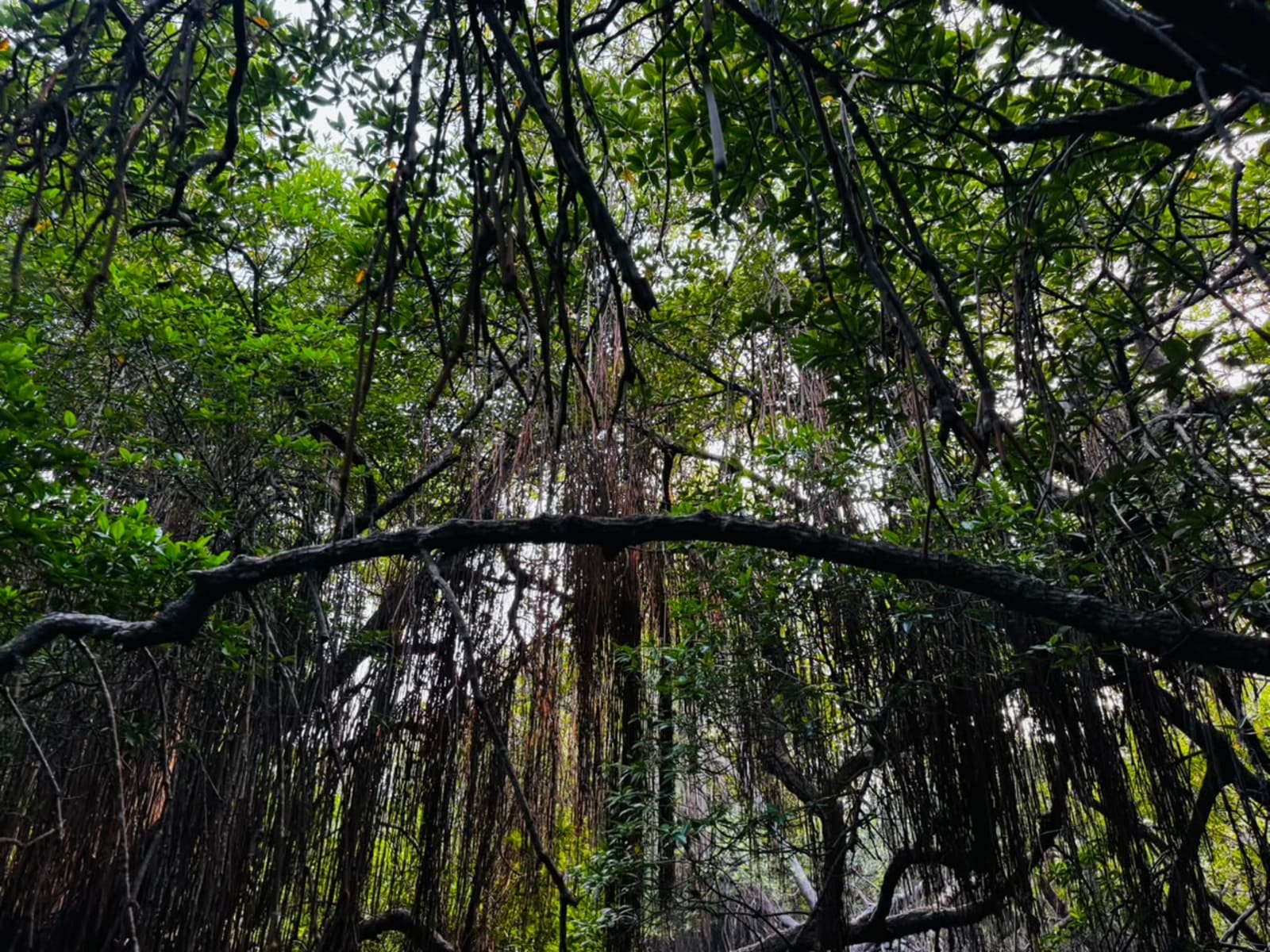
Leave the open river behind and slip into green shade — a slow journey through tunnels of mangrove roots where the loudest sound is birdsong.
The ecosystem
Why the mangroves matter
Mangroves are nurseries for river and sea life, natural storm barriers, and some of the most efficient carbon stores on earth. Our crew introduces the forest as we move through it — the arching roots, the crabs in the mud, the birds that fish the channels — so the safari is as much a nature walk by boat as a ride. We keep engines low and voices lower inside the tunnels.
- Shaded mangrove tunnels navigated slowly
- Kingfishers, herons, cormorants and monkeys when they show
- Local crew who read the water and the canopy
- Quiet, small-group boats — up to 8 guests
When to go
Mornings belong to the mangroves
The 06:30–08:30 window is prime time: cool air, low light under the canopy and birds at their busiest. Late afternoons toward sunset run a close second. If open water calls too, combine this with a river safari — or compare everything on the Bentota boat safari overview.
Good to know
Frequently asked questions
What is a mangrove safari?
A slow boat journey into the mangrove forest that fringes the Bentota River — a maze of shaded waterways between arched roots and dense canopy, home to birds, monkeys and aquatic life.
What wildlife lives in the Bentota mangroves?
Kingfishers, herons and cormorants hunt in the channels, monkeys cross the canopy, and monitor lizards rest on exposed roots. Every trip is different and sightings are never guaranteed.
How long should a mangrove safari be?
Two hours covers the temple reach and the main tunnels comfortably; three hours allows the quieter wildlife channels too. Tell us your pace and we will match the route.
Is the mangrove safari good for photography?
Yes — the tunnels filter the light beautifully and the boats move slowly enough for steady shots. Mornings around sunrise give the softest light and the most active birds.